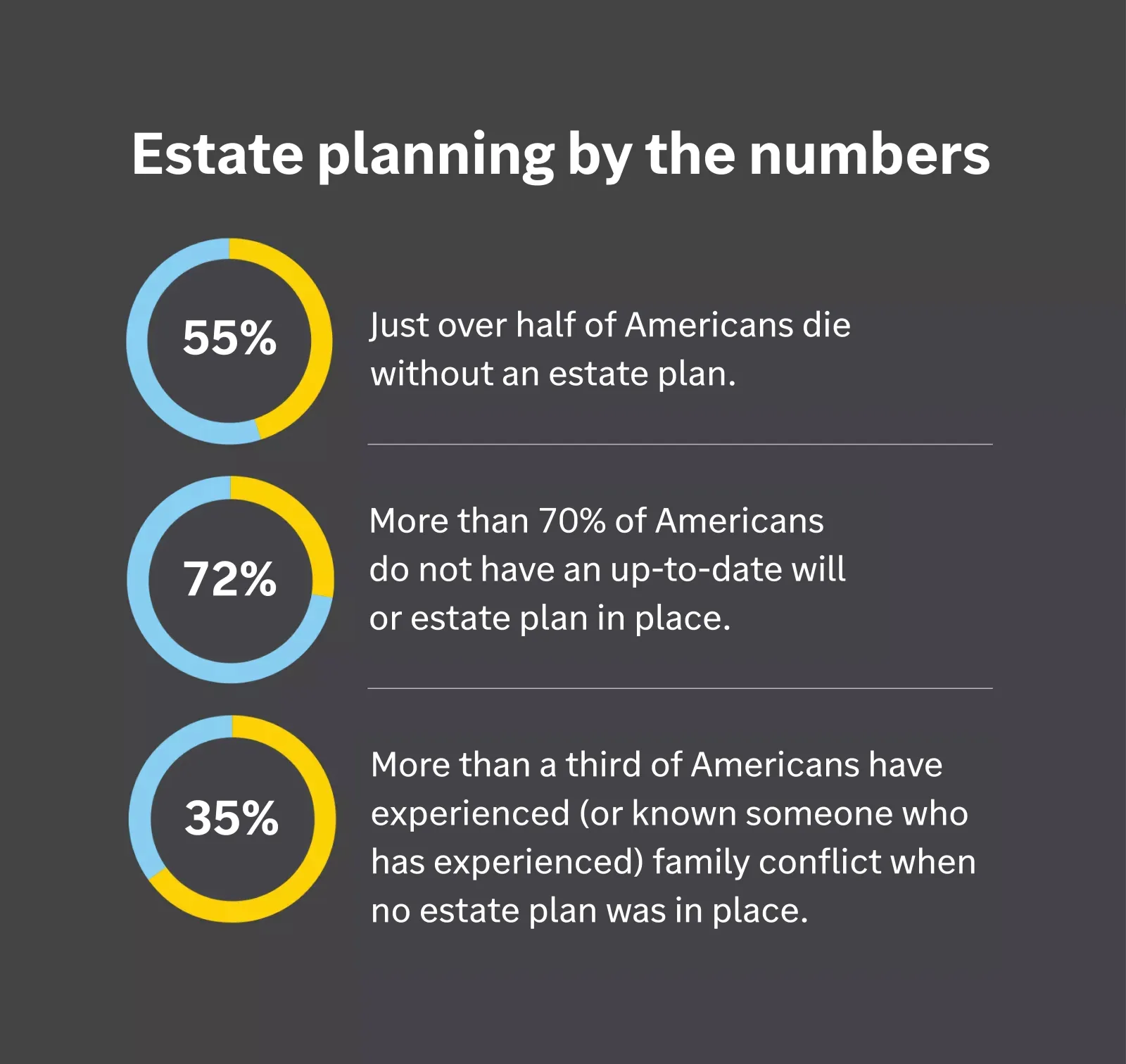
If you don’t have a will, or a will and trust, now is the time to work with your legal professional and get started:
- A will provides direction for the distribution of your property and the care of any minor children after your death. Generally, a will is simple to put in place. But assets governed by a will pass through probate (the public process for asset distribution), which can be time-consuming.
- Trust documents name a trustee to manage and distribute the trust’s assets. Your trustee can also provide management should you be unable to do so. Assets titled in the trust avoid probate, providing privacy. But you can’t name guardians in a trust, and drafting one is generally more expensive than with a will.
- A power of attorney allows you to name a person or an entity to make decisions on your behalf if you’re unable to do so yourself — for example, in cases of incapacity.
- A health care directive lets you direct how you’d like your future medical care handled. This includes your wishes regarding life-prolonging care, certain medicines, etc. This document is also known as an advanced directive.
- Beneficiary designations allow you to designate who should receive the proceeds at your death.
While most people need a will, not everyone needs a trust. Each situation is unique. When deciding, think about your age, wealth/assets, need for guardians and privacy concerns.
One mistake you’ll want to avoid is holding assets that are titled differently from how your estate plan is designed. You might have established some accounts long ago but then never updated them to reflect your current situation.
Also, many assets pass based on their beneficiary designations or asset titling rather than by the terms of a will or trust. Some types of investment accounts and insurance policies allow you to designate a beneficiary, and these designations usually supersede your will’s instructions and can bypass probate.
It’s common to not review how your assets are titled or forget to update your beneficiaries after a life event such as a death, birth, move, marriage or divorce. Coordinating your asset titling with your estate documents can help ensure your assets pass as you intend. Your financial advisor can help you review and, if necessary, update how your Edward Jones assets are titled and update your designated beneficiaries.
The need to access estate, medical directive or incapacity planning documents often occurs suddenly. Make sure your loved ones know how to access them.
For example, many people keep important documents in a secure location, such as a safe. In an emergency, you may not be able to give your loved ones this access. As a best practice, share with your loved ones or those you have designated to act on your behalf how to access these important documents.
While sharing this information is a personal decision, there are benefits to discussing your wishes now. This is your legacy (pdf). The more you share, the more your legacy can live on, fostering family harmony and limiting potential future conflict.
In today’s digital world, you may have online accounts or digital assets. For example, Edward Jones Online Access helps you stay in touch with your finances.
Make sure your estate plan addresses digital assets and that you have shared with your loved ones any necessary information regarding these assets and accounts. Some online account providers (Facebook, for example) allow you to designate a person to administer your account after your death.
It’s not uncommon to take a “one and done” approach with estate planning. But reviewing your documents periodically is just as important as setting them up.
Tax system changes, as well as changes in your personal situation, can impact how you would like to distribute your assets. A good practice is to review your estate plan every two to three years, or whenever there are significant changes to tax laws or your financial or family structure.