Amy Theisen, CFP®
Senior Strategist – Estate and Legacy, Client Needs Research
You’ve worked hard to build your portfolio and financial assets. But what about estate planning? This critical topic often ends up on the back burner because the time “doesn’t feel right.”
There are countless reasons why people avoid estate planning: I’m not wealthy, I’m too young, it’s too complicated, or simply, I don’t want to think about it. The truth is that by not putting your own plan in place, you have a “strategy” by default: the laws of your state.
These tips may help you avoid common estate-planning missteps and ensure your plan works as intended.
How you can act now
An estate plan helps put you in the driver’s seat regarding how your assets pass, who will care for your children and who can make decisions on your behalf. Your financial advisor can work with your tax, legal and estate-planning professionals to help ensure you have an estate plan that matches your goals. To learn more, visit “Estate Planning: Securing Your Family’s Future” for an in-depth webinar on the topic, hosted by Edward Jones.
Source: aarp.org.
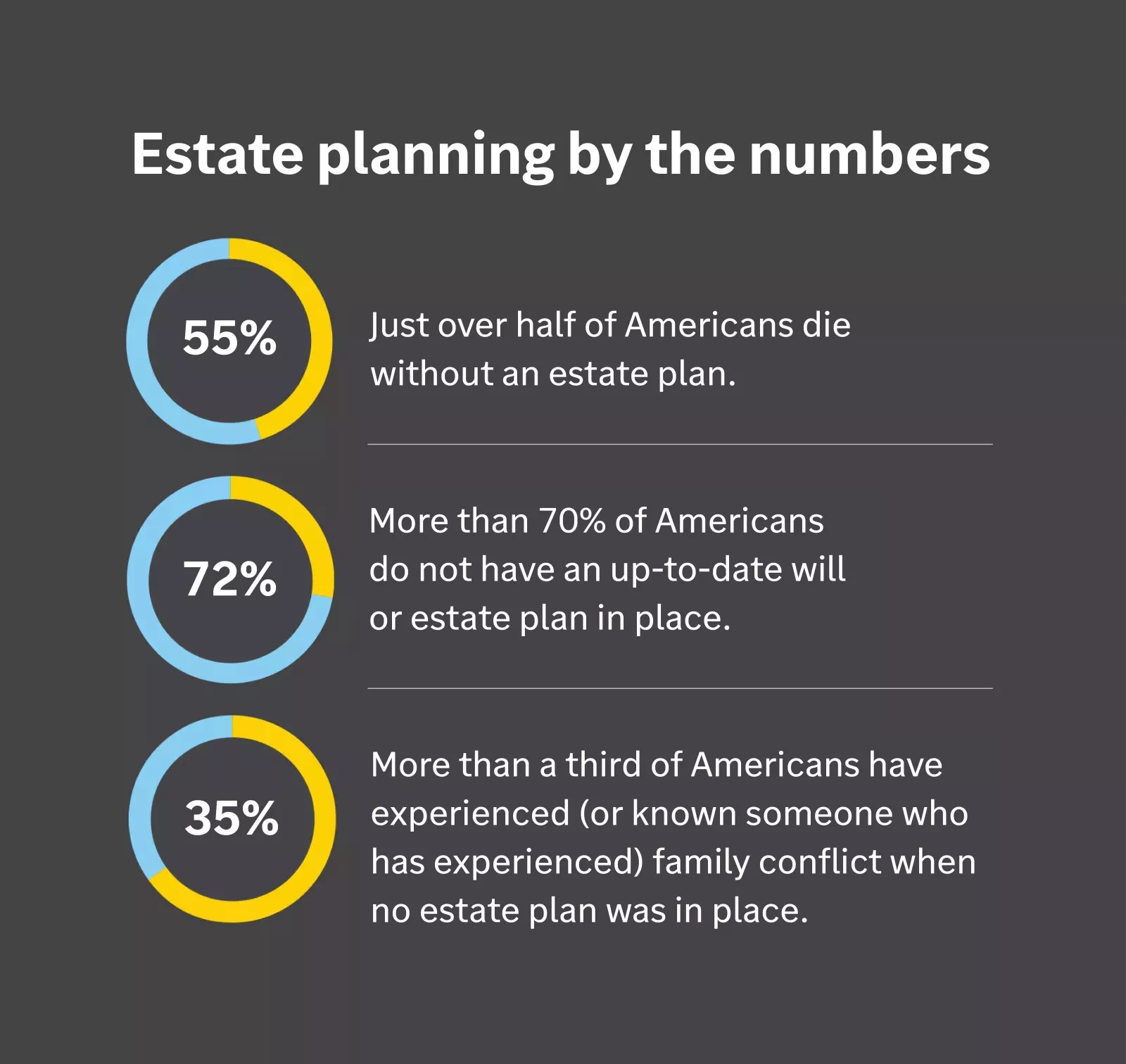
Just over half of Americans, or 55%, die without an estate plan. More than 70%, or 72%, of Americans do not have an up-to-date will or estate plan in place. More than a third of Americans, or 35%, have experienced (or know someone who has experienced) family conflict when no estate plan was in place. Source: aarp.org.
Important information:
This content is intended as educational and should not be relied on for other than broadly informational purposes. Edward Jones, its employees and financial advisors are not estate planners and cannot provide tax or legal advice. You should consult your estate-planning attorney or qualified tax advisor regarding your situation.