Nearly 25% of millennials say they’re not on track to achieve financial fulfillment — higher than both Generation X and baby boomers, according to Edward Jones’ Pulse of North America report. Millennials report feeling especially behind when it comes to major life milestones such as starting a family, having children, homeownership, saving for education and advancing their careers.
What does it mean to live a financially fulfilled life? The report finds most Americans view financial fulfillment beyond just saving money, but as the ability to do things they enjoy, spending quality time with family and freedom from money-related stress.
This underscores Edward Jones’ belief that a rich life is not simply about financial assets. In fact, Edward Jones has uncovered four common themes tied to a fulfilled life: health, family, purpose and finances. Our Life Pillars™ report explores these areas and offers suggestions for strengthening them in your own life.
The Pulse study examined how confident Americans feel about achieving financial fulfillment, the sources of their financial stress and the changes they’re willing to make. Here’s what that means for millennials.
Unique challenges, less optimism
While 83% of baby boomers feel they’re on track to achieve financial fulfillment, that number is 75% for millennials. Millennials describe their top three goals in pursuit of a financially fulfilled life as:
- Making a better life for themselves and their families
- Having freedom to pursue their passions
- Spending more time with friends and family
“To me, being financially fulfilled means having the freedom to do what you want … without stress.” – U.S. millennial
What’s driving millennials’ lower confidence? Compared with other generations, they report higher stress related to housing costs, childcare, budgeting and job insecurity.
Willing to adjust
Despite lower optimism, millennials are just as open as other generations to making financial and lifestyle changes, particularly in areas like spending, debt management and education.
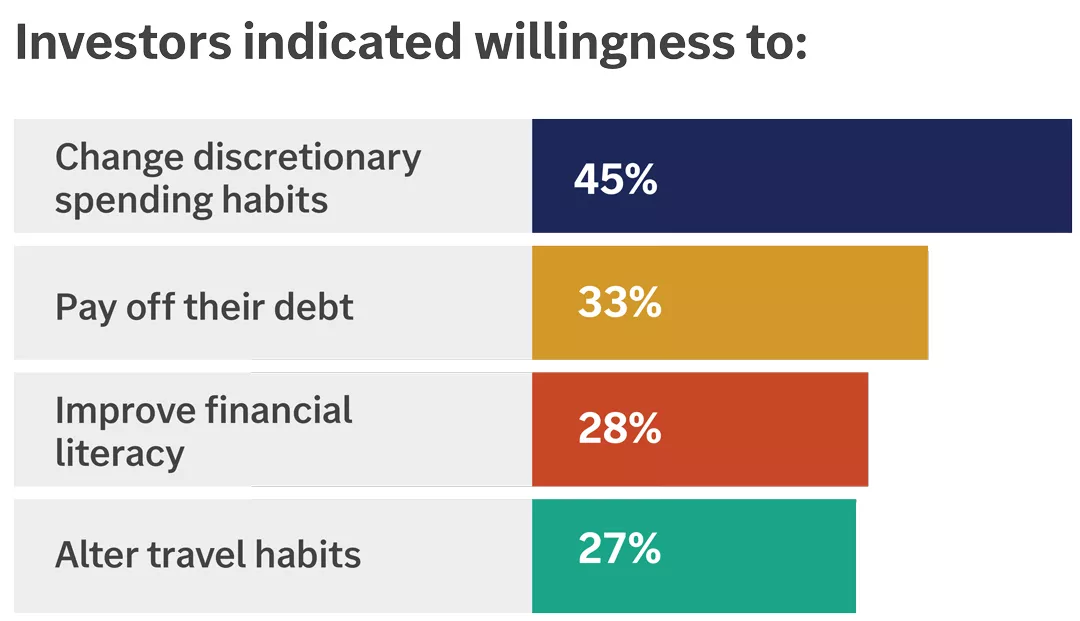
This chart shows investors' likelihood of changing certain lifestyle and spending habits in response to financial challenges. 45% of investors are willing to change discretionary spending habits; 33% are willing to focus more on paying off debt; and 28% and 27% are willing to improve their financial literacy and alter their travel habits, respectively.
This chart shows investors' likelihood of changing certain lifestyle and spending habits in response to financial challenges. 45% of investors are willing to change discretionary spending habits; 33% are willing to focus more on paying off debt; and 28% and 27% are willing to improve their financial literacy and alter their travel habits, respectively.
“I’m really wanting to pay off my student loan debt. I wish I’d gone into it differently when I went to college.” – U.S. millennial
This willingness to change reflects a proactive mindset among Americans striving for greater empowerment.
The advantage of professional support
The belief of Americans — and millennials in particular — in the value of professional help has steadily increased in recent decades.
In fact, the research found that investors who regularly work with a financial advisor tend to be more optimistic than those who manage their finances independently (79% vs. 71%). This highlights the value of professional guidance in fostering financial confidence and helping individuals feel more in control of their long-term financial future.
At Edward Jones, our financial advisors are expanding their roles beyond investment management and retirement planning to offer a more holistic approach. Investors increasingly value advisors’ softer skills — trustworthiness, communication and empathy — as they take on the role of behavioral coaches, helping clients navigate financial uncertainty and keeping them focused on long-term goals.
In a fast-changing financial landscape, this kind of human-centered guidance matters now more than ever. At Edward Jones, we understand Americans are reshaping what it means to live a financially fulfilled life. They seek advice that fits their life, not just their portfolio. Whether you’re just beginning your journey or want to ensure you’re on the right track, your financial advisor is committed to helping accelerate your journey to a financially fulfilled life.