As you approach 65, you’re likely thinking about the next chapter — travel plans, new hobbies and time with loved ones. But an important decision is on the horizon that deserves your attention now: choosing your Medicare coverage. While Medicare is one of the most important retirement benefits available, it can also be one of the most confusing. The good news? Understanding your options early can ease your mind and help you make confident decisions.
Two paths, one goal
With Medicare, you have two primary paths to choose from: Original Medicare and Medicare Advantage. Think of them as different approaches to the same destination: comprehensive health coverage in retirement.
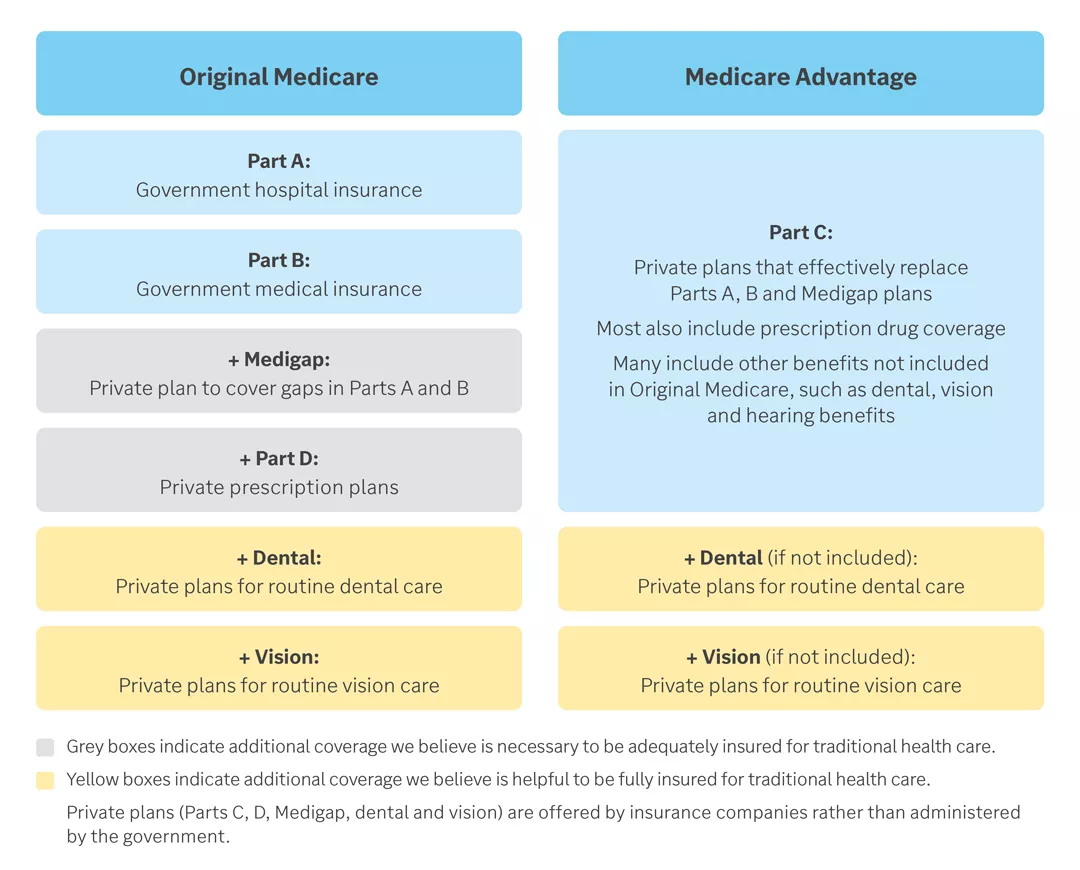
Original Medicare starts with government-provided hospital insurance (Part A) and medical insurance (Part B). Unless you have other coverage, such as retiree insurance, we generally recommend pairing Original Medicare with a Medicare Supplement (Medigap) policy and a prescription drug plan (Part D). You can also consider separate dental and vision coverage.
Medicare Advantage takes a different approach by bundling these components into one private insurance plan (Part C). Most Medicare Advantage plans include prescription drug coverage, and many offer added benefits like dental or vision care. It’s essentially an all-in-one package but with important trade-offs.
Understanding the trade-offs
Each path has distinct characteristics that may align differently with your priorities.
Original Medicare typically comes with higher premiums but offers less restrictive networks and lower cost-sharing. You have the freedom to see any provider who accepts Medicare, and once you’re happy with your supplemental coverage, you don’t need to revisit it annually (although you should revisit Part D annually during open enrollment).
Medicare Advantage plans generally feature lower premiums and may include extra benefits like dental and vision care. However, they aren’t standardized (so require more research to find the right fit), typically have more restrictive provider networks and higher cost-sharing, and they often require preauthorizations for certain services. They should also be reviewed annually during open enrollment.
Important: Your health needs will evolve
Here’s an important consideration many people overlook: Your health needs will likely evolve as you age. As you think through what’s most important to you, make sure you’re considering not just your health today but how that might change in the future.
Why does this matter? Once enrolled, it can be difficult to move from less comprehensive coverage to more comprehensive coverage. For example, if you start with Medicare Advantage and later want to switch to Original Medicare with a Medigap policy, you may face health screening requirements and higher costs. It’s worth thinking ahead.
Your next steps
Medicare enrollment typically begins at age 65, but many impactful decisions benefit from advance planning. Consider these questions:
- How important is comprehensive coverage and provider flexibility to you?
- Do you prefer more predictable health care costs with higher premiums, or lower premiums that come with more cost-sharing when you need health care?
- How much ongoing review do you want to do each year?
And perhaps most importantly:
- Do you anticipate significant health changes over the course of your retirement?
Your financial advisor can help you think through these considerations in the context of your overall retirement strategy. Together, you can explore the Medicare path that may support your health and financial goals for the years ahead.
Money and Meaning: Understanding Financial Fulfillment
What do Americans really think about their finances today? Discover what our 2026 Gallup research reveals about how values and emotions shape our relationship with money.