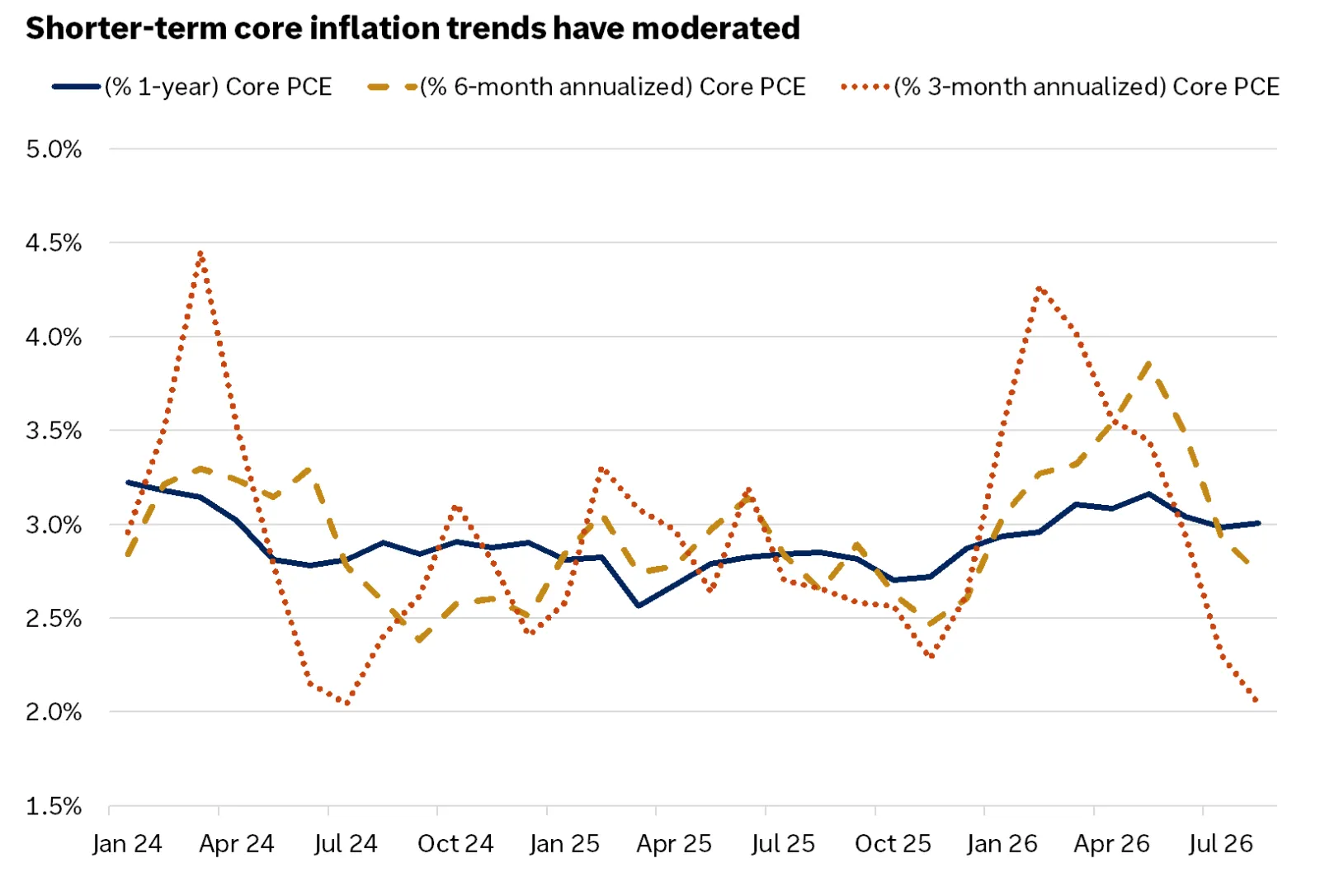
The chart shows that core PCE inflation in the U.S. has shown signs of moderation in recent months, with the 3-month annualized change falling to 2% in August.
The chart shows that core PCE inflation in the U.S. has shown signs of moderation in recent months, with the 3-month annualized change falling to 2% in August.
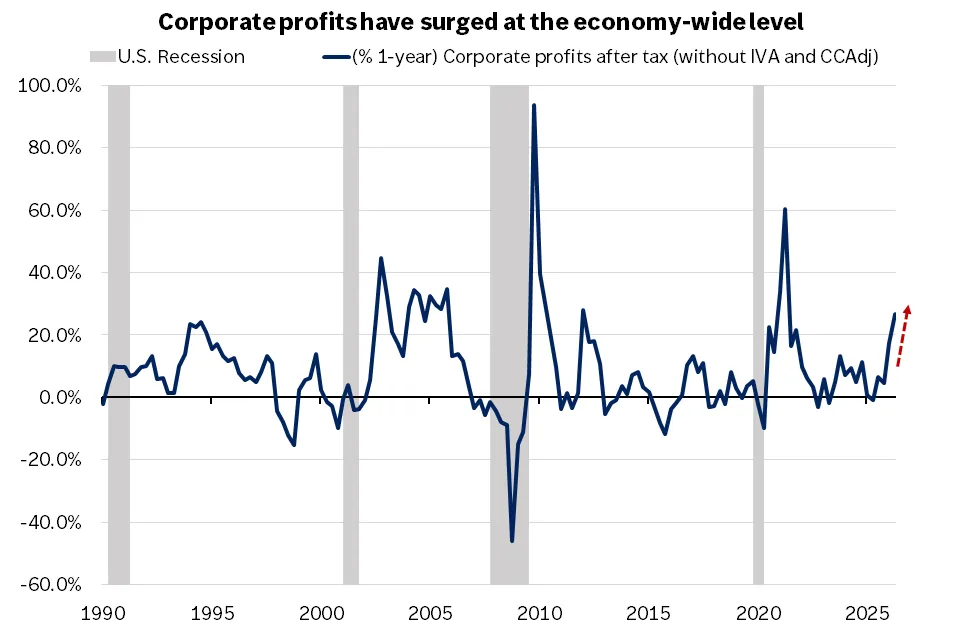
The chart shows that NIPA corporate profits have risen in recent quarters, signaling broad-based strength in corporate earnings in our view.
The chart shows that NIPA corporate profits have risen in recent quarters, signaling broad-based strength in corporate earnings in our view.
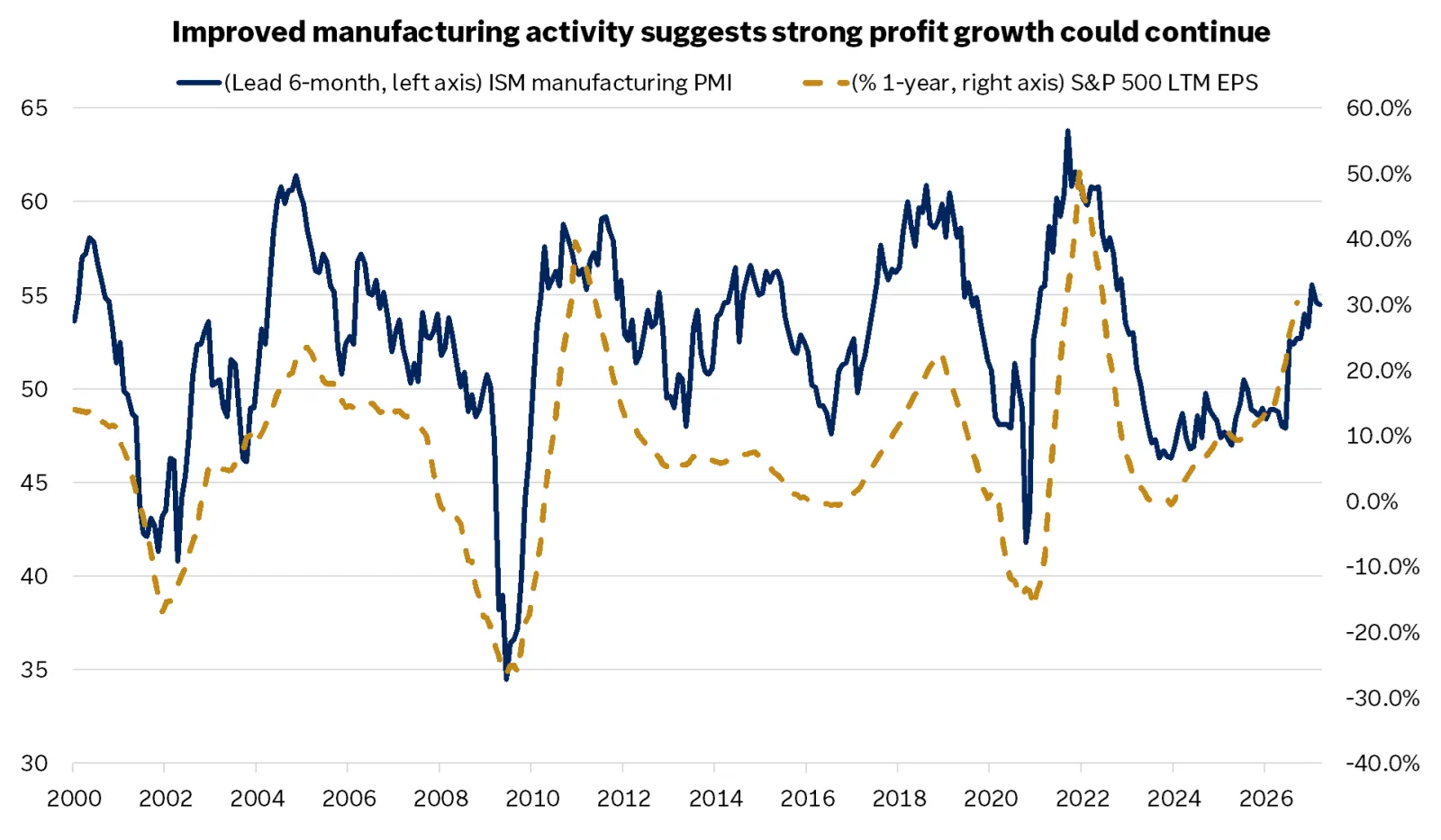
The chart shows that historically, a stronger ISM manufacturing PMI has been accompanied by rising earnings per share growth for the S&P 500. The recent strength in manufacturing could signal ongoing resilience in corporate profits.
The chart shows that historically, a stronger ISM manufacturing PMI has been accompanied by rising earnings per share growth for the S&P 500. The recent strength in manufacturing could signal ongoing resilience in corporate profits.

The table shows that in the five months outside of September 2026 where both the 2-year and 10-year Treasury yields rose by 0.5% or more in a given month, average six month forward returns were positive in four of five instances and positive in three of five instances over the subsequent three months. When accounting for the times when trailing six-month payroll growth was positive, returns were positive in each of the four instances over the subsequent six months and in three of four instances over the subsequent three months.
The table shows that in the five months outside of September 2026 where both the 2-year and 10-year Treasury yields rose by 0.5% or more in a given month, average six month forward returns were positive in four of five instances and positive in three of five instances over the subsequent three months. When accounting for the times when trailing six-month payroll growth was positive, returns were positive in each of the four instances over the subsequent six months and in three of four instances over the subsequent three months.
Important Information:
The Weekly Market Update is published every Friday, after market close.
This is for informational purposes only and should not be interpreted as specific investment advice. Investors should make investment decisions based on their unique investment objectives and financial situation. While the information is believed to be accurate, it is not guaranteed and is subject to change without notice.
Investors should understand the risks involved in owning investments, including interest rate risk, credit risk and market risk. The value of investments fluctuates and investors can lose some or all of their principal.
Past performance does not guarantee future results.
Market indexes are unmanaged and cannot be invested into directly and are not meant to depict an actual investment.
Diversification does not guarantee a profit or protect against loss in declining markets.
Systematic investing does not guarantee a profit or protect against loss. Investors should consider their willingness to keep investing when share prices are declining.
Dividends may be increased, decreased or eliminated at any time without notice.
Special risks are inherent in international investing, including those related to currency fluctuations and foreign political and economic events.
Before investing in bonds, you should understand the risks involved, including credit risk and market risk. Bond investments are also subject to interest rate risk such that when interest rates rise, the prices of bonds can decrease, and the investor can lose principal value if the investment is sold prior to maturity.