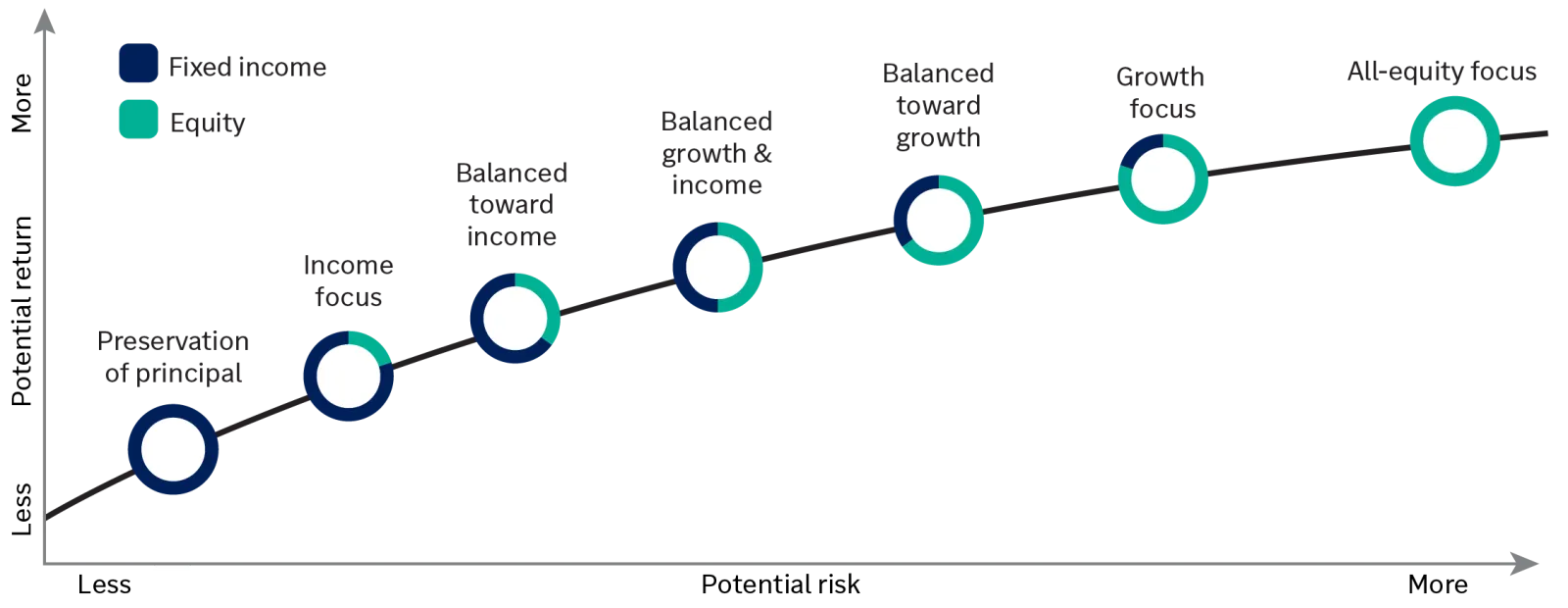
This graphic demonstrates the trade-off between risk and return. Higher return is typically accompanied by higher risk. Over the long run, we expect equities to provide potential for higher returns than bonds, but they are also generally more volatile and subject to greater risk than bonds. The amount of equity increases as you move across portfolio objectives on the graphic from left to right, which increases estimated returns as well as estimated risk.
This graphic demonstrates the trade-off between risk and return. Higher return is typically accompanied by higher risk. Over the long run, we expect equities to provide potential for higher returns than bonds, but they are also generally more volatile and subject to greater risk than bonds. The amount of equity increases as you move across portfolio objectives on the graphic from left to right, which increases estimated returns as well as estimated risk.
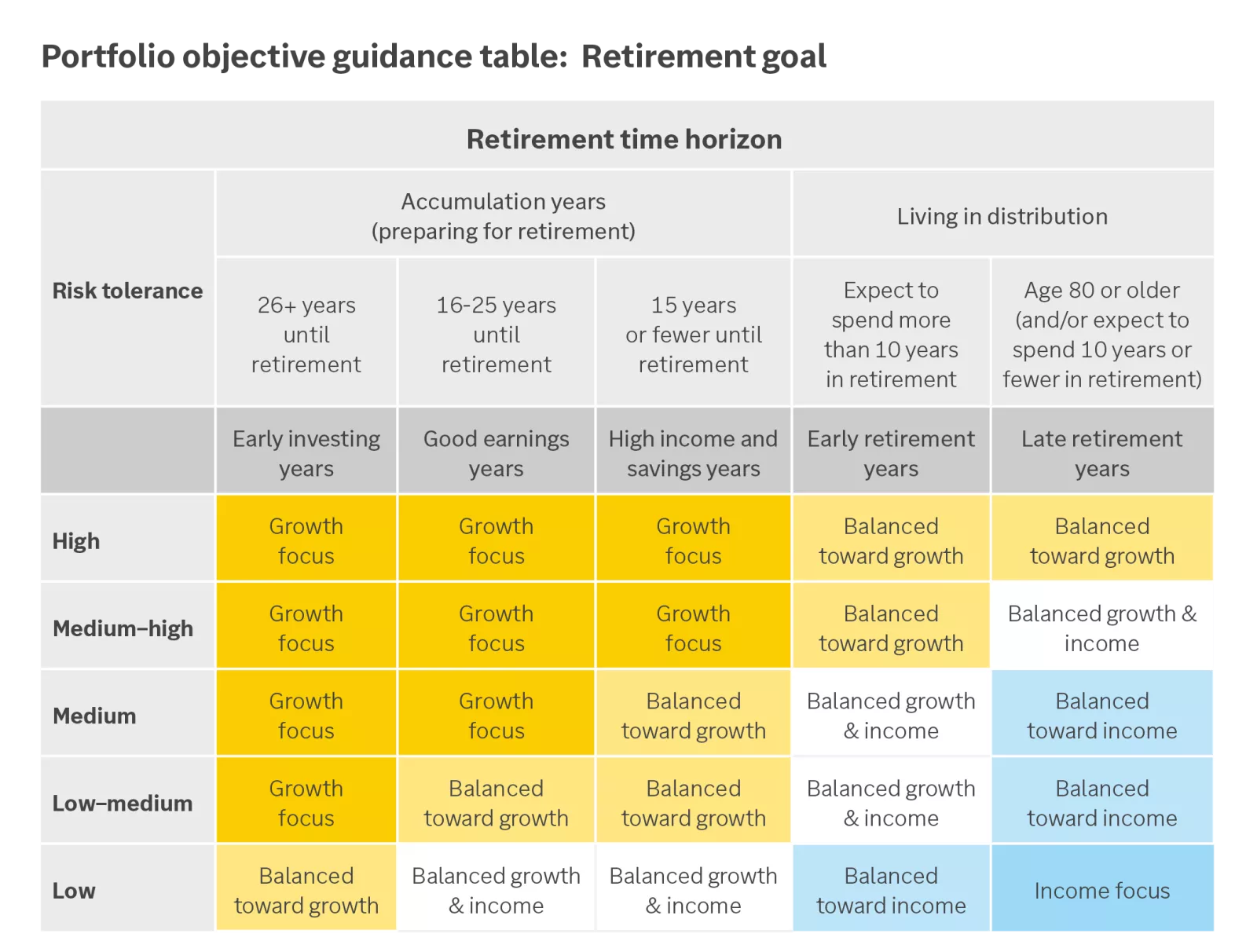
Note: Age 73 is the oldest possible retirement age for portfolio objective guidance purposes. Portfolio objective recommendations within the accumulation years also assume that you’ll spend more than 20 years in retirement.
The table above represents our guidance on how to select a portfolio objective for a retirement goal, which we provide as an example. For retirement goals, we recommend considering your life stage, as well as your comfort with risk and time horizon.
We’ve identified five investing stages of life related to retirement goals, dividing them into two categories — accumulation stages and distribution stages. Accumulation stages represent the stage when you’re saving for retirement. Distribution stages represent the stage when you’re already retired and using your investments to support your income needs.
Use this table as a guide to help you determine your unique portfolio objective for your retirement goal. First, find your life stage and time horizon across the top. Then, estimate your risk tolerance using the descriptions on the left side.
For example, if you’re in your early investing years and have a high risk tolerance, a growth focus portfolio objective may be right for you. If you’re in your late retirement years and have a low risk tolerance, an income focus portfolio objective may be more appropriate.
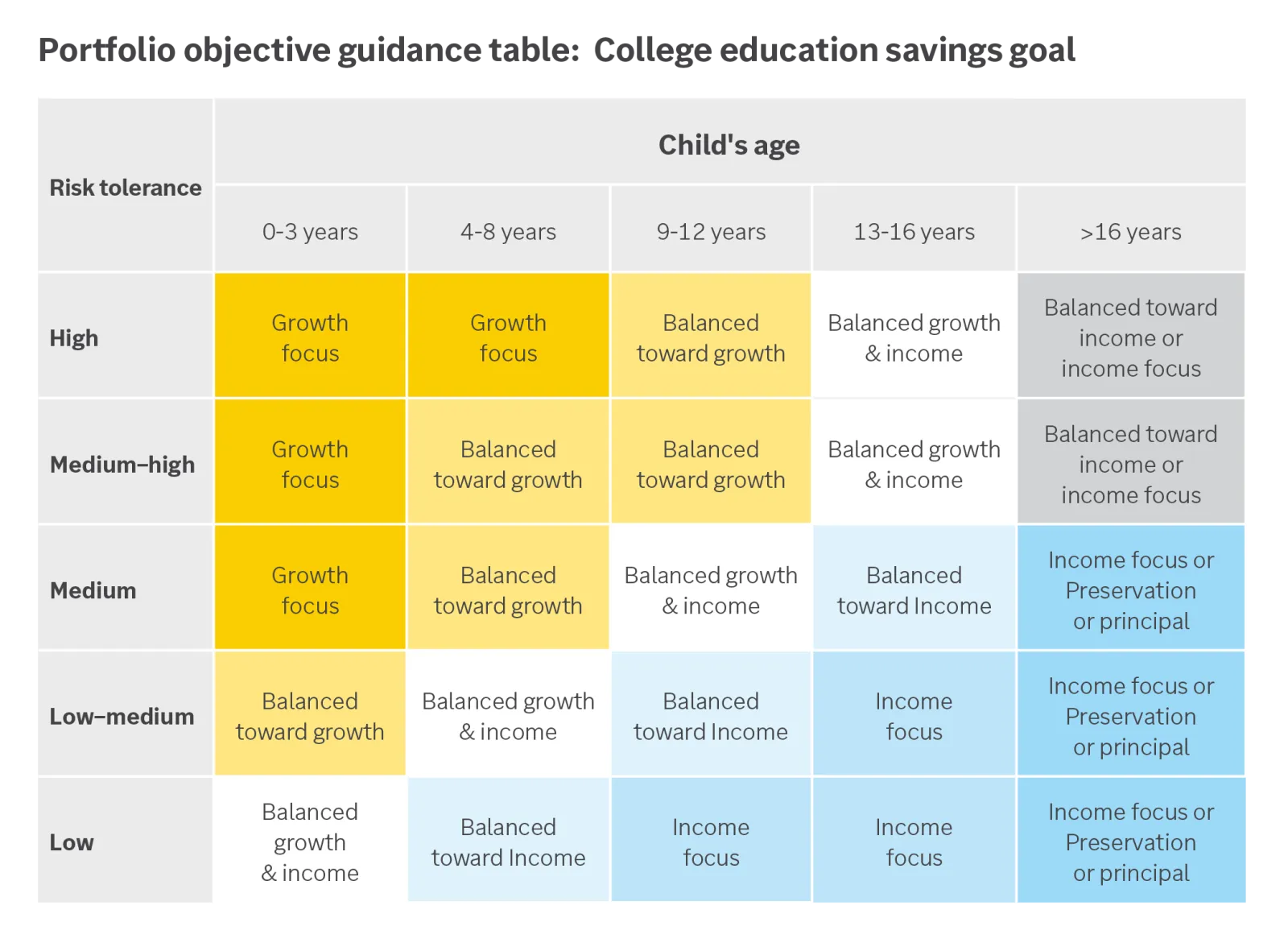
The table above represents our guidance on how to select a portfolio objective for a college savings goal, which we provide as another example. For college goals, we recommend considering your child's age (assuming they go to college at age 18), as well as your comfort with risk.
Use this table as a guide to help you determine your unique portfolio objective for your college goal. First, find your child's age across the top. Then, estimate your risk tolerance using the descriptions on the left side.
For example, if your child is 5 years old and you have a high risk tolerance, a growth focus portfolio objective may be right for you. If your child is 17 years old and you have a medium risk tolerance, an income focus or preservation of principal portfolio objective may be more appropriate.
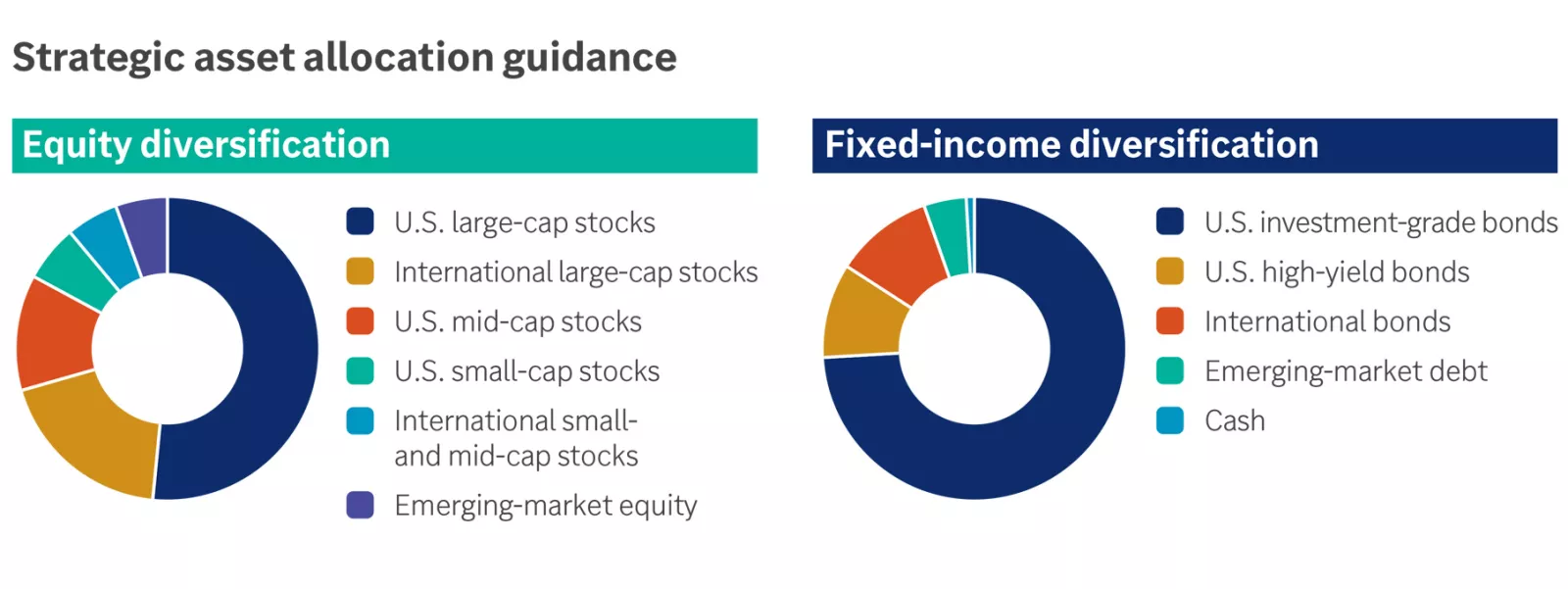
This graphic shows how we recommend dividing investments across a variety of asset classes within the equity and fixed-income portions of a portfolio based on our long-term outlook. The exact weighting of each asset class will depend on your optimal portfolio mix between equity and fixed-income investments as discussed above and displayed by our portfolio objectives. We call these recommended weightings for each asset class our “long-term, strategic asset allocation guidance.”
This graphic shows how we recommend dividing investments across a variety of asset classes within the equity and fixed-income portions of a portfolio based on our long-term outlook. The exact weighting of each asset class will depend on your optimal portfolio mix between equity and fixed-income investments as discussed above and displayed by our portfolio objectives. We call these recommended weightings for each asset class our “long-term, strategic asset allocation guidance.”