
ONE BIG THING

U.S. Agriculture at a Crossroads: USMCA Uncertainty, a Stalled Farm Bill, and Billions in Federal Aid 

The Big Picture: American agriculture is navigating one of the most turbulent policy environments in a generation. On July 1, the Trump administration chose not to renew the U.S.-Mexico-Canada Agreement (USMCA), instead initiating annual reviews of the agreement that will run through 2036. This decision that has injected significant uncertainty into North American trade relationships at exactly the moment when farmers are already reeling from the effects of global tariffs, soaring input costs from the Iran war, and a Farm Bill that has had multiple short-term extensions for nearly a decade. The uncertainty is prompting the White House to ask for billions more in emergency aid for producers, marking the second major farm aid measure this year. 

Why it matters: Canada and Mexico remain the two largest export markets for U.S. agricultural products, making the future direction of USMCA important for producers making decisions about investment, production, and market expansion. While relatively few observers expect the agreement itself to unravel, annual reviews introduce a level of uncertainty that businesses have not previously had to navigate. 

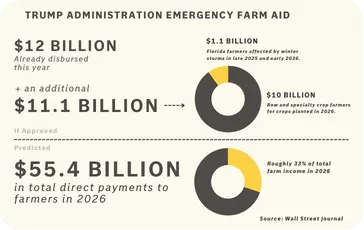
The Bigger Trend: The Trump administration's $11.1 billion aid request follows another $12 billion aid package that began paying out earlier this year, reflecting the cumulative pressure of higher production costs, trade disruptions, and volatile commodity markets. 

What’s Next: For many producers, these payments provide vital relief. But they also highlight a larger policy debate unfolding in Washington: whether emergency assistance is becoming a substitute for the stable trade relationships and long-term farm policy that have traditionally underpinned American agriculture. 

 Chart showing $12 billion in emergency farm aid already distributed, with $11.1 billion more proposed, contributing to an estimated $55.4 billion in direct farm payments in 2026.

ABOVE THE FOLD

Is the Democratic Party Moving Left? 

A series of Democratic primary victories this summer has reopened a familiar question in Washington: where is the Democratic Party headed? Progressive candidates backed by the Democratic Socialists of America (DSA) have won several high-profile Congressional primaries in New York and Colorado, and they are now targeting competitive statewide races in Michigan and Wisconsin while also beginning to look ahead to the 2028 presidential election. 

Why It Matters: The debates happening in these primaries will significantly impact the broader Democratic policy agenda heading into the 2026 midterms. However, moderate Democrats are quick to note that progressive candidates continue to perform strongest in heavily Democratic districts and cities. The next major test will be whether similar candidates can compete successfully in statewide races where general-election voters are typically more ideologically diverse. 

What We’re Watching: The August Democratic primaries in Michigan and Wisconsin will provide an indication of whether this year's progressive momentum represents a broader shift within the party, or if it remains limited to deep-blue urban districts. 

Data Centers Face Growing State-Level Pushback 

The Big Picture: As AI fuels a surge in data center construction, states and local governments are becoming the front line of the debate over energy use, water consumption, and community impacts. 

State of Play: New York’s Governor recently signed legislation placing a one-year moratorium on the construction of large data centers and establishing a framework to evaluate environmental impacts. Virginia, home to the world's largest concentration of data centers, is considering new requirements around energy use, transmission planning, and local oversight as electricity demand continues to climb. 

In Georgia, Minnesota, Michigan, Pennsylvania, South Carolina, Vermont, and Wisconsin, lawmakers have introduced proposals ranging from new environmental reviews to temporary development pauses and utility cost protections. Across the country, more than 100 local governments have delayed or blocked projects. The common thread is that policymakers are trying to balance two competing priorities: attracting AI investment while ensuring communities aren't left paying for the infrastructure needed to support it. 

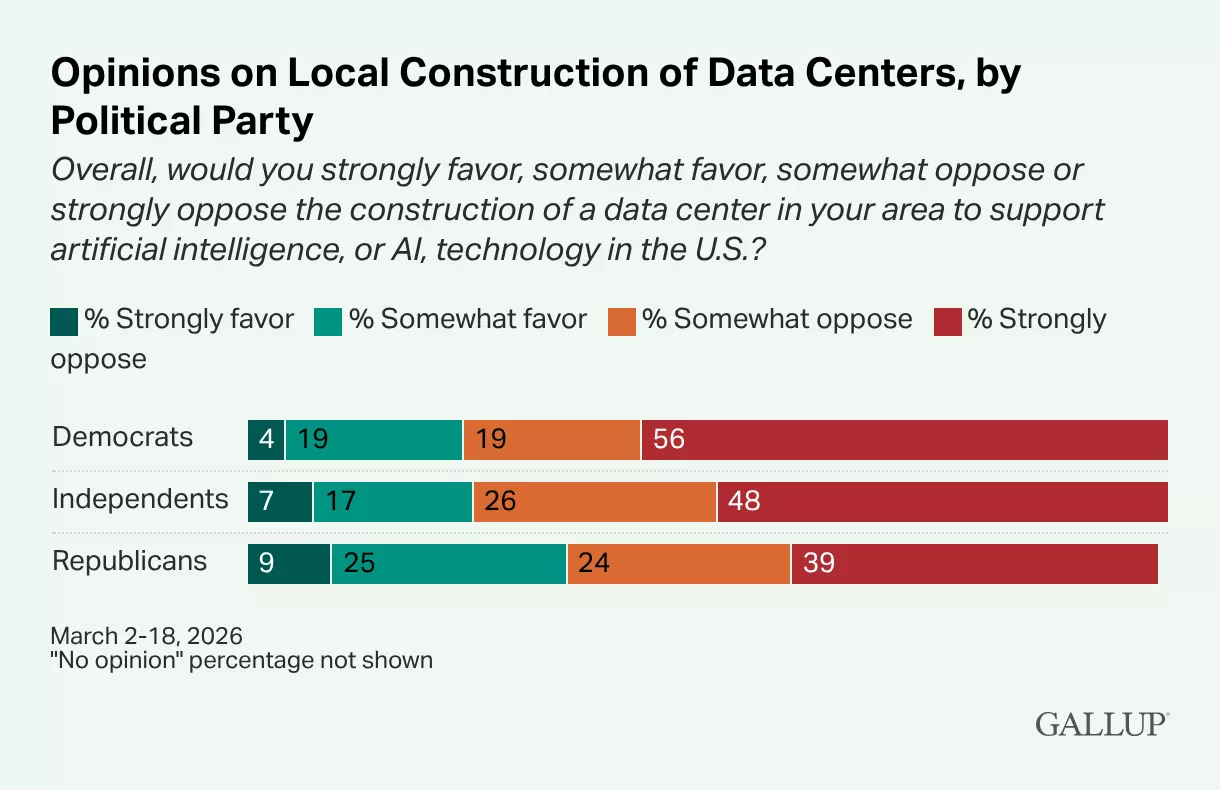
A Bipartisan Issue: Both parties have raised concerns over the AI infrastructure boom. Democrats have questioned environmental impacts and consumer costs, while Republicans have focused on electric grid reliability and whether existing ratepayers should subsidize infrastructure built for some of the world's largest technology companies. 

What We’re Watching: As Congress continues debating a federal approach to AI, states are unlikely to wait. Expect more legislatures to pursue their own permitting standards, utility regulations, and community benefit requirements over the next year. 

BELOW THE FOLD

Looking Forward

August brings Congress back home for the month, putting lawmakers in their districts and the 2026 midterm elections squarely in focus. We'll be tracking how campaigns, town halls, and key races begin shaping the policy debates waiting for Washington this Fall.

For a PDF version of the July Capital Currents Newsletter click here